Special Session 9: Developing Future-Ready Innovation Competencies through Foresight and AI-Enhanced Education
Description
Rapid technological, economic, environmental, and societal transformations
require education to prepare students not only to address current challenges but
also to anticipate change, identify emerging opportunities, and develop
responsible and innovative solutions. Foresight and artificial intelligence
offer complementary capabilities for achieving this goal: foresight provides
systematic approaches for exploring trends and alternative futures, while AI can
enhance information discovery, analysis, ideation, experimentation, and
decision-making.
This special session will provide an interdisciplinary forum for researchers,
educators, instructional designers, and industry practitioners to examine how
foresight and AI-enhanced education can contribute to the development of
future-ready innovation competencies. These competencies include opportunity
identification, critical and systems thinking, creativity, technological
awareness, strategic decision-making, collaboration, and the ability to
transform evidence into valuable solutions.
The session welcomes theoretical, empirical, and practice-based contributions
addressing the integration of horizon scanning, trend analysis, scenario
development, technology mapping, technology roadmapping, and scientific and
patent information analysis into educational environments. It also invites
research on how generative AI and other emerging technologies can support these
processes while preserving human judgment, ethical responsibility, and
intellectual rigor.
Diverse teaching-learning approaches are encouraged, including challenge-based,
project-based, collaborative, experiential, interdisciplinary, and problem-based
learning. Contributions may also examine methods for assessing innovation and
foresight competencies through analytical rubrics, portfolios, learning
analytics, performance-based assessments, and pre–post evaluation designs.
By integrating foresight and artificial intelligence into innovation education,
this session seeks to advance evidence-based educational models that empower
learners to anticipate emerging changes, envision alternative futures, and
develop responsible solutions to complex technological, organizational,
environmental, and societal challenges.
Session Topics
The topics of interest include, but are not limited to:
- Foresight and future-oriented competencies in education
- AI-enhanced pedagogical approaches for developing innovation competencies
- Horizon scanning, trend analysis, and opportunity identification for learning
- Scenario development and technology roadmapping in educational contexts
- Competitive and Technology Intelligence as a foundation for innovation
learning
- Challenge-based, project-based, collaborative, and experiential learning
approaches for innovation
- Assessment of foresight and innovation competencies
- Responsible and ethical use of AI in future-oriented education
Submission Method
Submit your Full Paper or your paper abstract-without publication (200-400
words) via Online Submission System, then choose
Special Session 9 (Developing Future-Ready Innovation Competencies through Foresight and AI-Enhanced Education)
Session Organizers
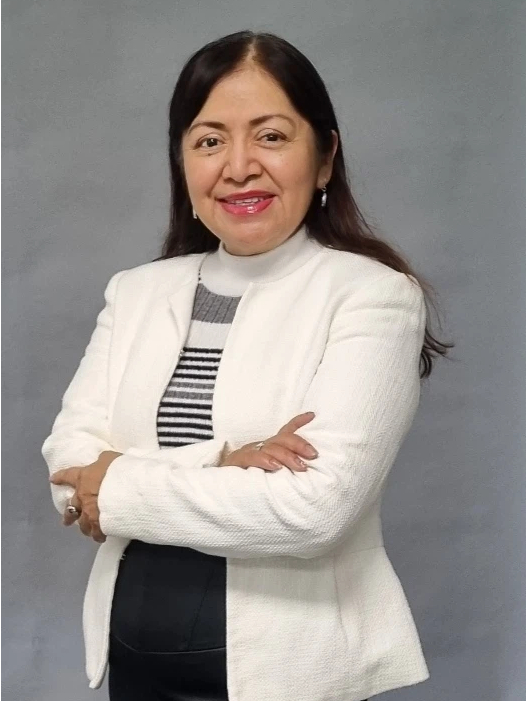 Prof. Marisela Rodríguez Salvador,
Tecnológico de Monterrey, Mexico
Dr. Marisela Rodríguez Salvador holds a PhD in
Business Administration and Management, awarded
Summa Cum Laude by the Universitat Politècnica de
Catalunya, Spain. She is a professor at the School
of Engineering and Sciences at Tecnológico de
Monterrey, Mexico, and holds Level III—the highest
distinction—within Mexico’s National System of
Researchers (SNII). Dr. Rodríguez Salvador belongs
to the Distinctive Circle of Professors at
Tecnológico de Monterrey. She is also the founder
and head of the Competitive and Technology
Intelligence for Innovation Unit, established in
2001. Through this unit, she has supported more than
100 organizations worldwide in strengthening their
innovation strategies and decision-making processes.
Her expertise encompasses foresight, Competitive and
Technology Intelligence, scientometrics, patent
analytics, technology mapping, technology
roadmapping, innovation management, and emerging
technology assessment. Her research integrates
scientific, technological, competitive, and market
intelligence to identify innovation opportunities
across healthcare, biotechnology, food,
manufacturing, advanced materials, education and
other strategic sectors, including the integration
of innovative educational technologies.
Dr. Rodríguez Salvador has extensive experience in
higher education and educational innovation. Her
teaching incorporates challenge-based,
collaborative, and technology-enhanced learning to
develop students’ innovation, critical thinking, and
strategic decision-making competencies. She holds a
professional certification in collaborative learning
and has designed educational interventions involving
generative AI, analytical rubrics, and
competency-based assessment.
She has presented her research and innovative
teaching practices at various international
conferences focused on teaching-learning, and
emerging technologies. Recently, she served as
Session Chair at the 7th International Conference on
Education and E-Learning (ICEEL 2023) in Japan and
received the Best Presentation Award at the
International Conference on Education Technology and
Computers (ICETC 2025) in Spain.