Special Session 8: Artificial Intelligence and Data-Driven Innovation in Personalized and Gamified Educational Technology
Description
Artificial intelligence and rich learner interaction data are reshaping how
educational technology engages, adapts to, and supports students. This special
session focuses on the intersection of AI-driven personalization and gamified
learning: systems that use machine learning, learning analytics, and learner or
player modeling to tailor content, game elements, feedback, and support to each
student. The session welcomes work across the full range of digital learning
environments, including Learning Management Systems, MOOCs, mobile learning, and
blended classrooms. A central theme is interpretability and pedagogical
grounding: as models become more capable, the field needs methods that connect
behavioral patterns to established educational and motivational theory, so that
personalization and gamification serve measurable learning rather than
engagement for its own sake. We invite empirical studies, system and framework
proposals, comparative analyses, and position papers on topics ranging from
behavior-based learner profiling and player typologies such as the Hexad model,
to performance prediction and retention, adaptive content recommendation,
intelligent tutoring, and gamification design aligned with curriculum,
assessment, and motivation theory. Contributions addressing datasets,
reproducibility, privacy, ethics, and responsible deployment are particularly
encouraged. The session aims to bring together researchers and practitioners
from AI, learning analytics, game-based learning, and instructional design to
shape the next generation of personalized and gamified educational technology.
Session Topics
The topics of interest include, but are not limited to:
- AI-driven personalization and adaptive learning in LMSs, MOOCs, mobile
learning, and blended classrooms
- Learning analytics and educational data mining from learner interaction logs
- Learner modeling, player typologies, and behavior-based profiling, including
Hexad-inspired approaches
- Interpretable machine learning for engagement, performance prediction,
retention, and learning support
- Intelligent tutoring systems, AI-assisted instruction, and adaptive content
recommendation
- Gamification design grounded in motivation theory, feedback, assessment, and
curricular alignment
- AI-supported formative assessment, feedback generation, and learner progress
visualization
- Datasets, reproducibility, privacy, ethics, and responsible deployment in
AI-driven educational technology
Submission Method
Submit your Full Paper or your paper abstract-without publication (200-400
words) via Online Submission System, then choose
Special Session 8 (Artificial Intelligence and Data-Driven Innovation in Personalized and Gamified Educational Technology)
Session Organizers
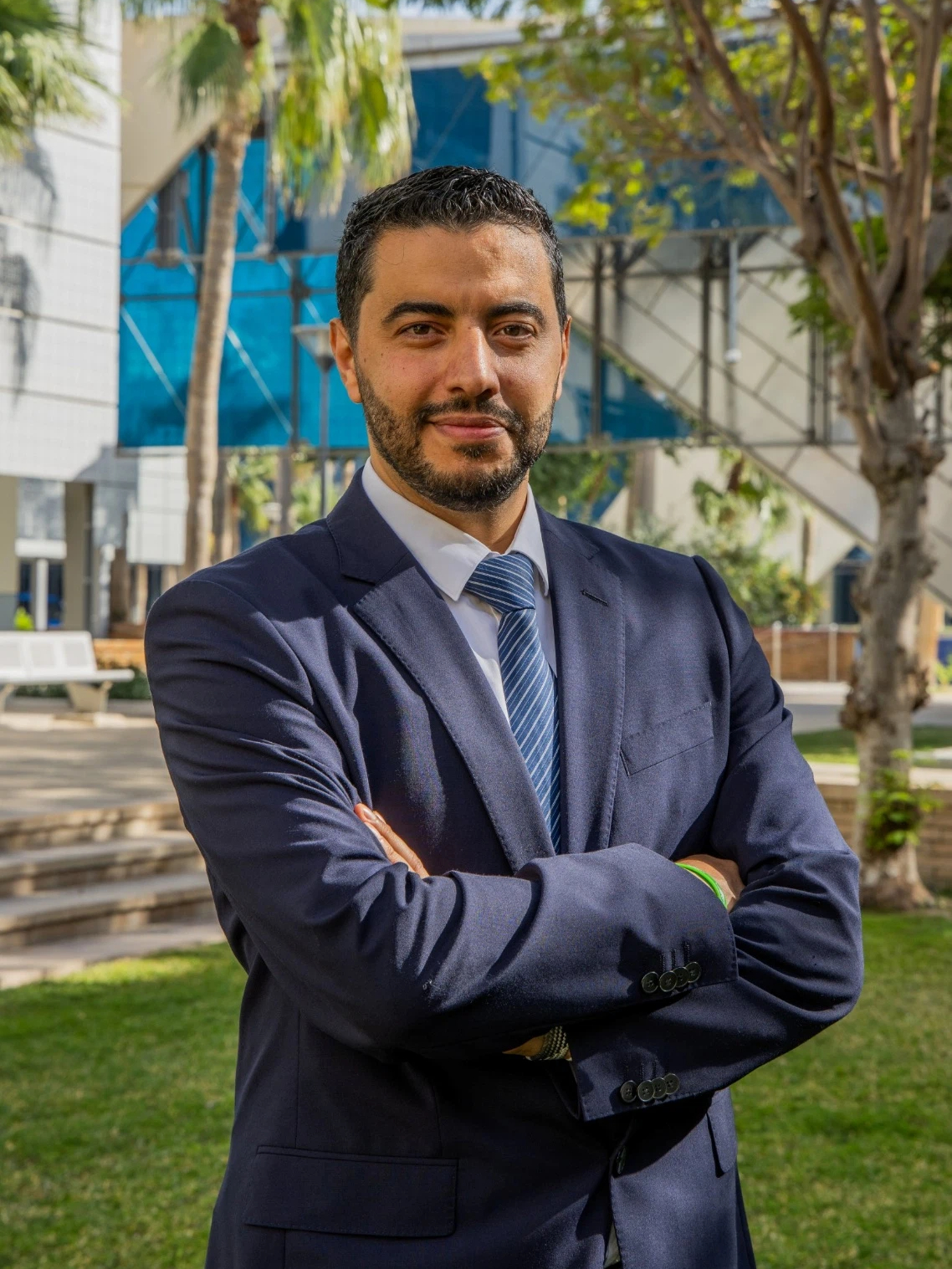 Asst. Prof. Seifeddine Bouallegue,
University of Doha for Science and Technology, Qatar
Dr. Seifeddine Bouallegue is an Assistant Professor
and Head of the Software Systems Department at the
University of Doha for Science and Technology
(UDST), Qatar. He holds a Ph.D. in Computer Science,
Telecommunications and Electronics from Université
Pierre et Marie Curie (Paris VI), France. His
research focuses on educational technology,
gamification, AI-driven personalized learning,
machine learning, and learning analytics. He is the
Lead Principal Investigator of a three-year, USD
700,000 Academic Research Grant from the Qatar
National Research Fund on enhancing programming
course outcomes through gamification and AI-driven
personalized learning. His recent work spans early
student performance prediction, learner
classification and player typologies, and
AI-enhanced e-learning, with publications in venues
including IEEE Access, Information, PeerJ Computer
Science, Electronics, and Springer LNDECT, as well
as the ICETC conference series. Alongside his
academic career, he brings industry and innovation
experience as Co-Founder and CTO of E-Butler
Technologies, as Co-Founder of Enable Tech, and as
Digital Innovation Manager at Qatar University. His
contributions have been recognized with the UDST
Excellence in Research Award (2025). He serves the
research community as Co-Chair of the Software
Engineering and AI track at the ACM Symposium on
Applied Computing (SAC) 2026, as a peer reviewer for
IEEE Access, and as a member of IEEE and ACM.
 Asst. Prof. Vanilson De Arruda Burégio,
University of Doha for Science and Technology, Qatar
Dr. Vanilson De Arruda Burégio is an Assistant
Professor of Software Engineering in the College of
Computing and Information Technology at the
University of Doha for Science and Technology
(UDST), Qatar. He holds a Ph.D. and an M.Sc. in
Computer Science from the Informatics Center of the
Federal University of Pernambuco (CIn-UFPE), Brazil.
His research interests include software engineering,
software architecture, software reuse, APIs, and
web-based social systems, an area in which he helped
advance the concept of social machines. Before
joining UDST, he was an Associate Professor at the
Federal Rural University of Pernambuco, Brazil, and
combined his academic career with more than a decade
of industry experience as a software architect,
researcher, and team leader in organizations
including SERPRO and C.E.S.A.R. His teaching spans
programming, software architecture, component-based
development, and software testing.
 Assoc Prof. Tewfik Ziadi,
University of Doha for Science and Technology, Qatar
Dr. Tewfik Ziadi is an Associate Professor of
Software Engineering in the College of Computing and
Information Technology at the University of Doha for
Science and Technology (UDST), Qatar. He received
his Ph.D. in Computer Science from the University of
Rennes 1, France, and his HDR (Habilitation) from
Université Pierre et Marie Curie (Paris VI), France.
Before joining UDST, he was an Associate Professor
at Sorbonne University in Paris, where he led the
MoVe research team at the LIP6 laboratory. His
research focuses on software product line
engineering, variability management, model-driven
engineering, and software reuse, with contributions
ranging from behavioral model inference to
open-source tools such as But4Reuse. He served as
Co-General Chair of the Software Product Line
Conference (SPLC 2019), coordinated the European
ITEA REVAMP2 research project, and has served on
numerous international program committees.