Special Session 3: Technology-Enhanced Learning in STEM Education: Opportunities and Challenges
Description
The rapid advancement of digital technologies is transforming STEM education,
particularly engineering education, by creating new opportunities for innovative
teaching, learning, and assessment approaches. This special session aims to
provide a platform for researchers, educators, and practitioners to explore the
role of technology-enhanced learning (TEL) in developing effective, inclusive,
and future-ready STEM education.
The session will focus on emerging technologies such as artificial intelligence
(AI), learning analytics, virtual and remote laboratories, digital twins,
immersive technologies, and online/blended learning environments. It will
highlight successful implementations, pedagogical frameworks, and evidence-based
practices that enhance student engagement, collaboration, creativity,
problem-solving skills, and disciplinary understanding across science,
technology, engineering, and mathematics education.
In addition, the session will address key challenges associated with technology
adoption, including digital accessibility, assessment strategies, academic
integrity, staff readiness, ethical considerations, and institutional
transformation. Contributions are invited from interdisciplinary perspectives
covering STEM education, educational technology, artificial intelligence in
learning, and innovative pedagogical practices.
The session aims to foster knowledge exchange and collaboration among academics,
researchers, educators, and industry professionals to identify future directions
for technology-enhanced STEM education and support the development of effective
digital learning ecosystems.
Session Topics
The topics of interest include, but are not limited to:
- Artificial intelligence and generative AI applications in STEM education
- Learning analytics and data-driven approaches for improving STEM learning
outcomes
- Virtual, remote, and augmented reality laboratories for STEM learning
- Digital twins and simulation-based learning environments
- Blended, online, and active learning approaches in STEM education
- Technology-enhanced assessment, feedback, and student engagement strategies
- Challenges, ethics, accessibility, and sustainability of digital
transformation in STEM education
Submission Method
Submit your Full Paper or your paper abstract-without publication (200-400
words) via Online Submission System, then choose
Special Session 3 (Technology-Enhanced Learning in STEM Education: Opportunities and Challenges)
Session Organizer
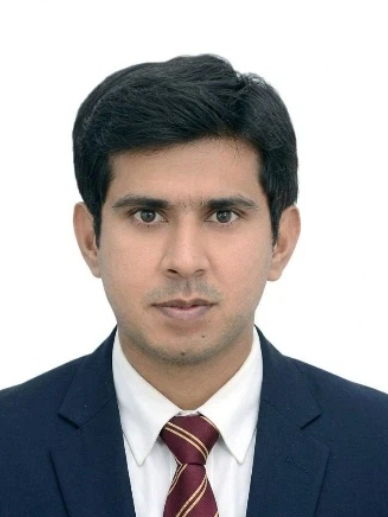 Dr. Zia ur Rehman,
University of Derby, UK
Dr. Zia ur Rehman is a Professional Engineer, Fellow
of the Higher Education Academy (FHEA), and an
accomplished researcher with over a decade of
experience in higher education teaching and
high-impact research across the UK, China, and
Pakistan. Recognized among the world’s top 2% of
scientists in Stanford University’s global database
and acknowledged as a global talent in civil and
geotechnical engineering by the Royal Academy of
Engineering, his expertise spans civil engineering,
geotechnical engineering, artificial intelligence,
and interdisciplinary STEM innovation.
Dr. Rehman’s research integrates advanced
computational approaches, AI, mathematical
modelling, environmental science, and sustainability
to address complex challenges in civil and
geotechnical engineering and other STEM domains. His
doctoral research at world leading Tsinghua
University received the Outstanding Doctoral
Dissertation Award, contributing novel advances in
the constitutive modelling of soil-structure
interactions. He has authored over 80 peer-reviewed
research publications in leading international
journals.
Dr. Rehman has extensive experience in engineering
education, curriculum development, teaching
innovation, and technology-enhanced learning. He has
designed and delivered undergraduate and
postgraduate courses and supervised numerous
research dissertations. He currently serves on
editorial boards of international journals,
including Infrastructure and AI in Sustainable Built
Environment, and contributes as a reviewer, editor,
conference committee member, and organiser of
international workshops and special sessions. His
work promotes the integration of emerging
technologies, artificial intelligence, and digital
transformation to advance research, education, and
innovation within civil and geotechnical engineering
and the broader STEM community.