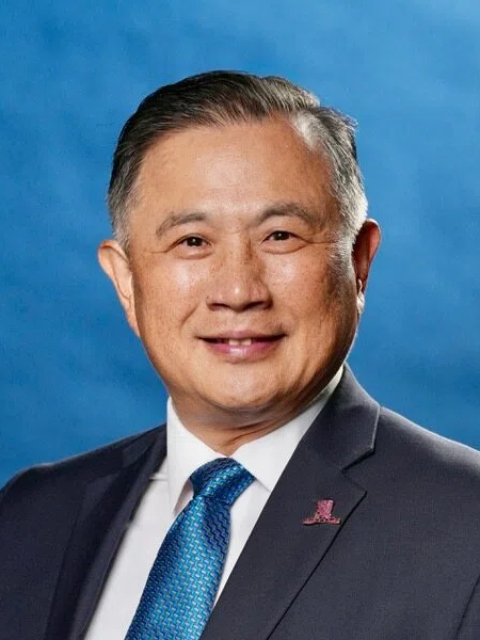
Prof. Irwin King
FACM, FIEEE, FAAAI, FINNS, FAAIA, FHKIE
The Chinese University of Hong Kong, Hong Kong, China
Irwin King, Pro-Vice-Chancellor (Education) and Distinguished Professor at the Department of Computer Science & Engineering, The Chinese University of Hong Kong, has a diverse research portfolio in machine learning, social computing, artificial intelligence, and data mining. His scholarly contributions include publications in prestigious journals and editorial board memberships with international publishers. He has received numerous accolades, including Test of Time Awards at ACM CIKM, ACM SIGIR, and ACM WSDM, and the Dennis Gabor Award from INNS for his pioneering work in machine learning within social computing. As a Fellow of ACM, IEEE, AAAI, INNS, and HKIE, he has demonstrated exceptional leadership in the field. He has held significant positions, including President of the International Neural Network Society (INNS) and General Co-chair for premier international conferences like WebConf, ACML, and RecSys. He is also the Director of the ELearning Innovation and Technology (ELITE) Centre, the Trustworthy Machine Intelligent Joint Lab, and the Machine Intelligence and Social Computing (MISC) Lab. His academic journey began with a Bachelor of Science degree from Caltech, followed by a Master of Science and Doctor of Philosophy in Computer Science from the University of Southern California (USC).
Speech Title: From Data to Insights: How AI is Shaping Assessment Strategies
Abstract: In an era where data is abundant, transforming information into actionable insights is paramount for effective educational assessment. The integration of artificial intelligence (AI) in education is reshaping assessment strategies, offering unprecedented opportunities to enhance learning outcomes. In this presentation, titled "From Data to Insights: How AI is Shaping Assessment Strategies," delves into the transformative role of artificial intelligence in revolutionizing assessment practices. Attendees will gain insights into how AI technologies analyze vast datasets to identify patterns, predict student performance, and personalize learning experiences. We will showcase innovative AI-driven tools that enhance the accuracy and efficiency of assessments, enabling educators to provide timely feedback and tailored support. By the end of this presentation, participants will have a comprehensive understanding of how AI empowers educators and improves learning outcomes. They will be equipped with practical strategies to implement AI in their own assessment practices, transforming their educational approaches and fostering student success.

Daniel Mitelpunkt
Imperial College London, UK
Daniel Mitelpunkt is Founder and Director
of Imperial College London’s Digital Media Lab (DML), established to develop
interactive and time-based solutions and media for learning and research.
The lab’s work ranges from spatial computing in traditional lecture theatres to
VR digital twins of teaching labs, positioning DML as the university’s
interdisciplinary hub for applied media.
DML is recognised for its close alignment with evolving needs and opportunities,
and for its collaborative approach—working with leading academic and
professional staff across the institution in both education and research. The
team brings together expertise from gaming, broadcast, and XR, creating a
dynamic environment for innovation. An inspirational external advisory board
further enriches the lab’s work.
Beyond Imperial, Daniel is an active advocate for Creative Technology within
Higher Education, championing stronger ties between academia and the creative
industries and giving this emerging field a stronger voice.
Speech Title: TBA
Abstract: TBA
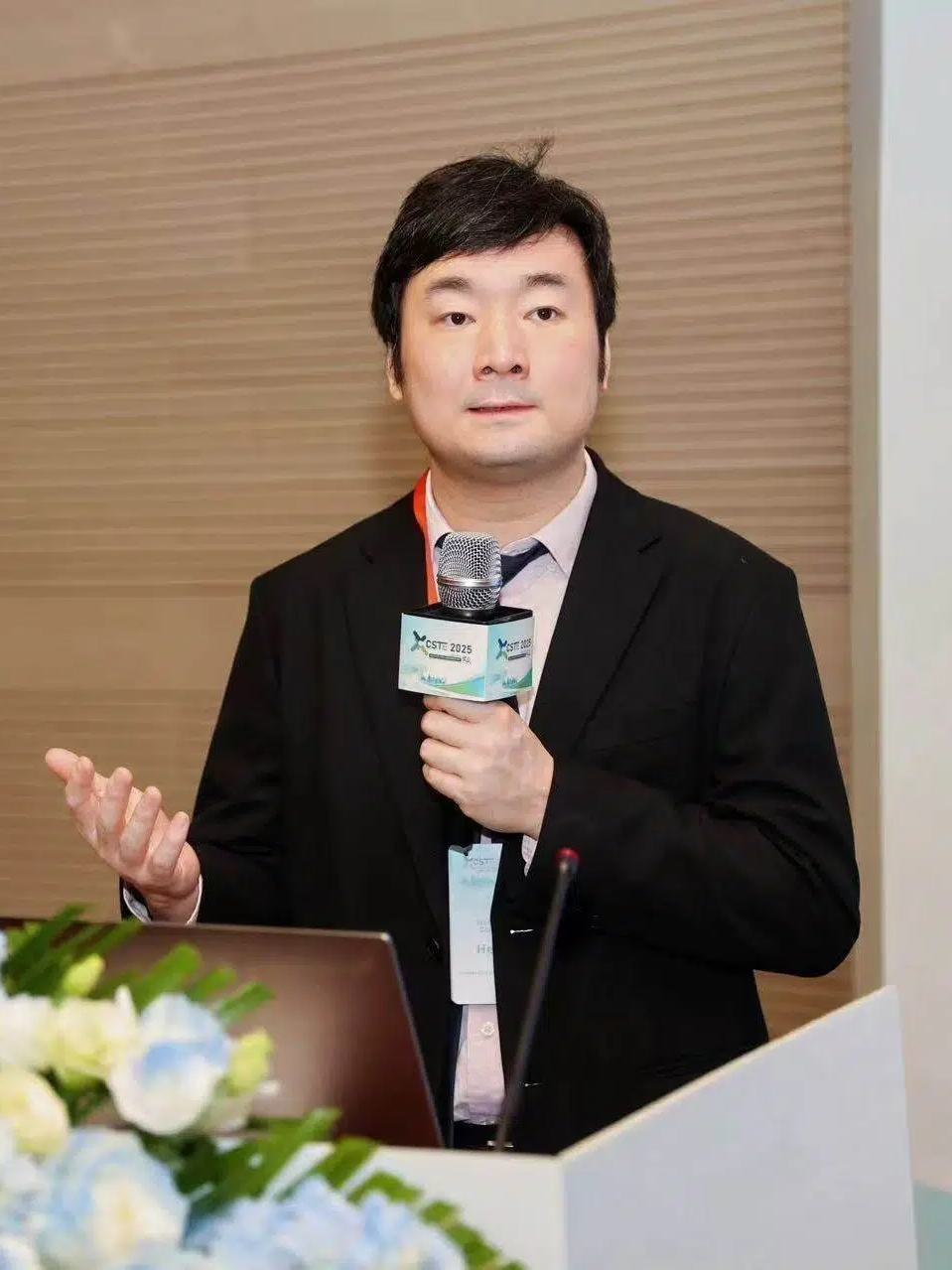
Prof. Heng Luo
Central China Normal University, China
Heng Luo is Professor and Vice Dean of the Faculty of Artificial Intelligence in Education at Central China Normal University. He received his Ph.D. in Instructional Design, Development, and Evaluation from Syracuse University in 2015 and later worked as a Research Associate at Pennsylvania State University. His research integrates learning sciences, instructional design, and artificial intelligence to improve educational quality and equity. He has led research projects funded by the National Natural Science Foundation of China, the National Education Sciences Planning Program, and the Ministry of Education, and has published more than 60 papers as first or corresponding author in leading journals, including three ESI Highly Cited Papers. He serves on the editorial boards of several SSCI/SCI journals and as Program Committee Chair of CSTE 2025–2026. His honors include awards from AERA and AECT, the CNKI Highly Cited Scholar Award (Top 1%), the Special Prize of the Hubei Provincial Teaching Achievement Award, and the Guizi Young Scholar Award.
Speech Title: TBA
Abstract: TBA
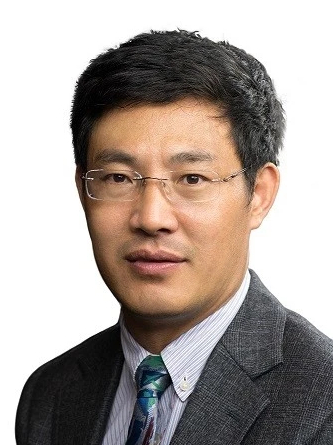
Assoc. Prof. Qiyun Wang
Nanyang Technological University, Singapore
Qiyun Wang is Co-Director of the Centre for Research and Development in Learning (CRADLE) at Nanyang Technological University (NTU), Singapore, ranked #12 in the QS World University Rankings 2026. He is also an Associate Professor in the Department of Learning Sciences and Assessment at the National Institute of Education (NIE), NTU. He has been consistently recognised among the world’s top 2% of educational researchers in the Stanford–Elsevier rankings since 2021. He is Editor-in-Chief of Research and Practice in Technology Enhanced Learning (RPTEL).
Dr. Wang has published more than 50 SSCI-indexed journal articles and is the author of the Springer Nature monograph Designing Technology-Mediated Learning Environments: Perspectives, Processes, and Applications. His research focuses on technology-mediated learning, online learner engagement, and blended synchronous learning. He has led a series of Singapore Ministry of Education-funded research projects investigating online learner engagement in digital education, including Promoting and Monitoring the Cognitive Engagement of Online Students in the Blended Synchronous Learning Environment and Enhancing and Monitoring the Emotional Engagement of Students in Synchronous Online Learning.
Speech Title: Online Learner Engagement in Digital Education
Abstract: Online learners often face greater challenges in sustaining engagement than their classroom counterparts. Limited opportunities for peer interaction, reduced access to non-verbal cues, and technical challenges often make it difficult for them to remain actively engaged in learning. Promoting and sustaining online learner engagement has therefore become an important concern in digital education.
At the same time, monitoring online learner engagement in real time remains challenging for instructors. The limited visibility of non-verbal cues, such as body language and facial expressions, together with the small video windows typically available in video conferencing, makes it difficult to identify learner engagement. Although surveys, interviews, classroom observations, and physiological measures can provide useful insights, many of these approaches are subjective or impractical in authentic classroom settings.
Drawing on two funded research projects, I have investigated how online learner engagement can be promoted and monitored, particularly in blended synchronous learning environments where online and classroom learners participate simultaneously. In this talk, I will present a theoretical framework for promoting and monitoring engagement and discuss practical strategies that instructors can adopt to engage online learners. I will also share insights from my research and personal experiences with emerging AI tools for promoting online learner engagement and facial-expression detection technologies for monitoring their engagement.